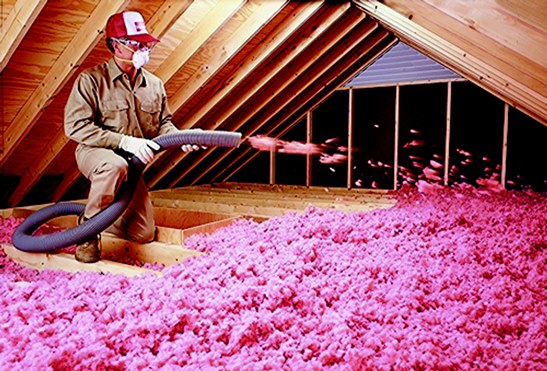
Typically manufactured in two different forms — pre-cut batts and Rolls, and blown-in loose-fill — fiberglass building insulation is used chiefly for thermal and acoustical functions in wall cavities, attics and other critical open spaces in building assemblies. Among its key advantages is worth. Fiberglass insulation has a lower installed price than many other kinds of insulating materials and, for equivalent R-Value performance (i.e., thermal resistance), it is generally the very cost-effective alternative when compared to cellulose or sprayed foam insulation systems.
Let us take a closer look at the thermal performance of fiberglass building insulation.
Thermal performance and energy efficiency
Fiberglass insulation helps make buildings more thermally efficient by better retaining the desirable temperature of enclosed spaces, whether they are heated or cooled. Its thermal performance reduces utility costs for building owners, conserves nonrenewable fuel resources and provides greater occupant comfort (when used along with appropriately sized heating and cooling equipment).
Furthermore, fiberglass insulation Offers design flexibility. Greater levels can be installed in certain sections of a construction to boost overall thermal performance and compensate for regions with reduced thermal values, like windows and doors. It enables a broad selection of R-Values, providing the specifier more options for meeting national and provincial energy requirements.
Ranging from R-8 into R-40, whereas loose-fill fiberglass can be blown-in with pneumatic apparatus to meet almost any R-Value requirement. Blown-in fiberglass insulation can also be installed over existing batt insulation in renovation projects to significantly increase overall R-Value.
Since It’s inert and does not settle, properly installed fiberglass Insulation keeps its R-Value during a lengthy period of time. Fiberglass insulation batts and rolls must always be set up at their complete designed depth to accomplish the stated R-Value — compressed fiberglass insulation loses R-Value. By way of instance, R-20 (RSI-3.5) fiberglass insulation with a depth of 6-1/4 inches (159 mm) compressed to 5-1/2 inches (140 mm) will experience a reduction in R-Value to R-19 (RSI-3.34). In the event the substance is allowed to recover its initial depth, however, the complete R-Value is restored. Installers should always make sure the insulation completely fills construction cavities without gaps or voids.
Moisture resistance
When exposed to moisture, fiberglass insulation neither absorbs nor holds water. If the material appears free of visible defects, installers must dry it thoroughly to restore its entire R-Value. When the area surrounding the insulation has been scrutinized, cleaned and completely dried, the fiberglass insulation could be emptied and will recover its original R-Value1.
Fire Resistance
Produced from sand and recycled glass, fiberglass insulating material is naturally noncombustible and remains so for your product’s lifestyle. It requires no further fire-retardant chemical remedies. Many building codes also recognize fiberglass insulation as an acceptable fire stop in wood- and steel-framed wall assemblies.
